

⬤ CPA-Led Entity & Tax Guidance
How to Form a C Corporation: A Step-by-Step Guid
A clear, CPA-led walkthrough of the C corp – what it is, why founders choose it, and the full incorporation process laid out in the order you will actually encounter it.
What a C corporation is
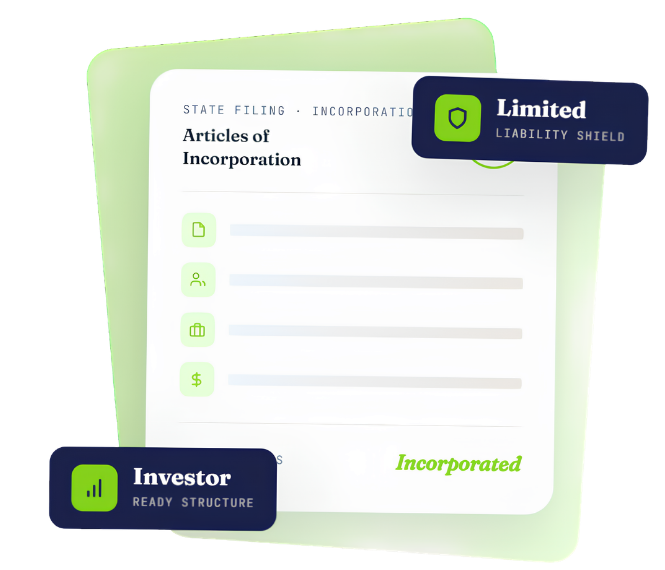
A C corporation is a business entity formed under state law that exists as a legal person entirely separate from the people who own it. Once it is incorporated, the business – not its shareholders – earns the revenue, signs the contracts, holds the assets, and carries the debts.
That separation is the whole point. The corporation pays tax on its own profits at the corporate rate, and the shareholders are taxed separately on what they receive from it. Because the entity stands on its own, the personal assets of its owners are generally insulated from the obligations of the business. The name itself comes from the part of the federal tax code that governs how these corporations are taxed
The defining features of a C corp
Every business structure carries its own trade-offs, and a C corp is defined by a specific set of characteristics. Understanding them is the first step in deciding whether this is the right framework for your company.
Separate legal entity
The corporation operates independently of its owners and continues regardless of who holds its shares.
Limited liability
A shareholder’s exposure is capped at what they invested, which keeps personal assets out of reach of business creditors.
Double taxation
The corporation pays tax on its profits, and shareholders pay tax again on dividends they receive – the same income taxed at two levels.
Unlimited shareholders
A C corp can have any number of shareholders, and its shares can be held by individuals, other entities, or the public.
Perpetual existence
The company carries on even as owners come and go, are bought out, or pass away.
Defined management layers
Shareholders elect a board of directors, and the board appoints officers to run day-to-day operations.
Why founders choose to incorporate as a C corp
Choosing an entity type is one of the most consequential early decisions a founder makes, because it shapes how the company grows, how it is taxed, and how investors and employees relate to it. The C corp is especially common among businesses that intend to scale or raise outside capital. Its main draws are these:
A liability shield
Owners gain a barrier between their personal finances and the company’s obligations, which matters most when the business faces legal claims or financial strain.
Room to raise capital
A C corp can issue multiple classes of stock, which is exactly what venture capital and institutional investors expect to see before they fund a company.
No cap on ownership
Unlike some other structures, a C corp places no limit on how many shareholders it can have – a prerequisite for any company eyeing a public offering.
Equity to attract talent
Stock options and equity grants are a powerful recruiting tool, and the C corp structure supports them cleanly.
Continuity
Because the entity outlives any individual owner, long-term planning and succession become far simpler.
Reinvestment flexibility
A C corp can retain earnings and plow them back into the business rather than distributing them, which in some cases moderates the overall tax burden.
How to form a C corp, step by step
Setting up a C corp is an orderly process, but it is unforgiving of shortcuts — skipping a requirement usually means circling back later under worse conditions. The steps below follow the sequence most founders move through, from naming the company to keeping it in good standing.
Choose a business name
The first step is selecting a name that is not already taken by another entity registered in your state of incorporation. Most states also require the name to carry a designation that signals corporate status – words such as “Corporation,” “Incorporated,” or “Limited,” or their standard abbreviations.
Pick a state of incorporation
Where you incorporate is a real decision, not a formality. Many companies register where they operate, but others choose a state known for business-friendly law. Delaware is the perennial favorite for its mature and flexible corporate statutes, while states like Nevada are chosen for their tax treatment.
Appoint a registered agent
Every C corp must name a registered agent – a person or company designated to receive legal documents and official state correspondence on the corporation’s behalf. The agent must keep a physical address in the state of incorporation and be available during normal business hours.
File the articles of incorporation
This is the founding document that brings the corporation into existence. It records the essentials – the company name, its address, the registered agent, and the type and number of shares it is authorized to issue. You file it with the secretary of state and pay a filing fee to formalize the entity.
Draft corporate bylaws
Bylaws are the corporation’s internal rulebook. They set out how the company is run – the procedures for meetings, the rights and duties of shareholders, directors, and officers, and the administrative machinery that keeps everything orderly. Clear bylaws prevent disputes and make resolving them easier.
Appoint the initial directors
Directors set the company’s direction and make its most significant decisions. At the outset, the incorporator names the initial directors, who hold their seats until the first shareholder meeting, at which point the shareholders formally elect the board.
Hold an organizational meeting
This first official meeting launches the corporation’s operations. The directors adopt the bylaws, appoint the officers who will manage daily affairs, and address the other startup matters that get the company moving – all of it recorded in the meeting minutes.
Issue stock
The corporation issues shares to its initial owners, both to raise capital and to formalize who owns what. These shares – defined back in the articles of incorporation – are the record of each shareholder’s stake in the company.
Obtain licenses and permits
Depending on what the business does and where it operates, it will need a particular set of licenses and permits before it can legally run – anything from a general local business license to specialized industry permits.
Register for state taxes
Tax registration varies by state. If your state levies a sales tax and your corporation sells taxable goods or services, you will need a sales tax permit so you can collect and remit it. Other state registrations may apply depending on your activity.
Get an Employer Identification Number (EIN)
An EIN is the federal tax ID the IRS issues to a business – the corporate equivalent of a Social Security number. You will need it for almost everything that follows, from hiring employees to filing federal returns to opening a bank account.
Open a business bank account
Mixing personal and corporate money is a serious error – it muddies your records and can undermine the very liability protection the corporation is supposed to provide. A dedicated business bank account keeps the line between you and the company clean.
Stay compliant
Forming the corporation is the start, not the finish. To keep its status and its protections intact, the company has to meet ongoing state requirements – maintaining current corporate records, holding and documenting annual meetings, and keeping every license and permit valid.
Staying compliant after formation
A C corp’s legal protections are not automatic in perpetuity; they depend on the company behaving like a corporation year after year. Most states expect an annual report and a franchise or registration fee, and the corporation is expected to keep its directors and officers current, hold its required meetings, and document the decisions made at them.
The practical risk of letting these slip is twofold. The state can revoke the corporation’s good standing, and in disputes a court may look at sloppy records as a reason to set aside the liability shield. Treating compliance as routine housekeeping rather than an afterthought is what keeps the structure doing its job.
Annual reports & fees
Most states require a yearly filing and a franchise or registration fee to keep the entity in good standing.
Meetings & minutes
Hold the required director and shareholder meetings, and document the decisions made at each one.
Current records
Keep corporate records, the cap table, and your registered agent details up to date and accurate.
Frequently asked questions
Both are corporations under state law; the difference is federal tax treatment. A C corp is taxed at the entity level and again on dividends. An S corp passes its income through to shareholders’ personal returns, avoiding the entity-level tax, but it comes with restrictions on the number and type of shareholders. A company forms as a corporation first, then may elect S corp status if it qualifies.
Delaware has a long-established body of corporate law and a specialized court that handles business disputes, which makes outcomes more predictable. Investors are familiar and comfortable with Delaware corporations, so the choice can smooth fundraising. That said, it is not automatically right for every company, especially smaller businesses operating entirely in one state.
Double taxation means the corporation pays tax on its profits, and shareholders pay tax again on dividends distributed from those profits. A C corp can reduce its impact by retaining and reinvesting earnings rather than distributing them, or by electing S corp status if eligible. Whether either makes sense depends on the company’s specifics.
It is possible to incorporate without one, and many founders use formation services for the filing itself. But the decisions that surround incorporation – choosing a state, structuring stock, drafting bylaws, and planning for tax – benefit from professional guidance, and getting them right at the start avoids costly corrections later.
The state filing can be quick – sometimes a matter of days, faster with expedited processing – but the full picture takes longer once you account for bylaws, the organizational meeting, stock issuance, the EIN, and bank setup. Timelines vary by state and by how prepared the founders are going in.
Get Started
Setting up your corporation? Start with the right structure.
Countsure works alongside founders and finance teams to get the foundations right – from choosing an entity structure to handling the tax and compliance obligations that follow incorporation.
- Free 30-minute consultation with a CPA
- Fixed-fee, fully transparent pricing
- 100% remote - no travel or visa required